

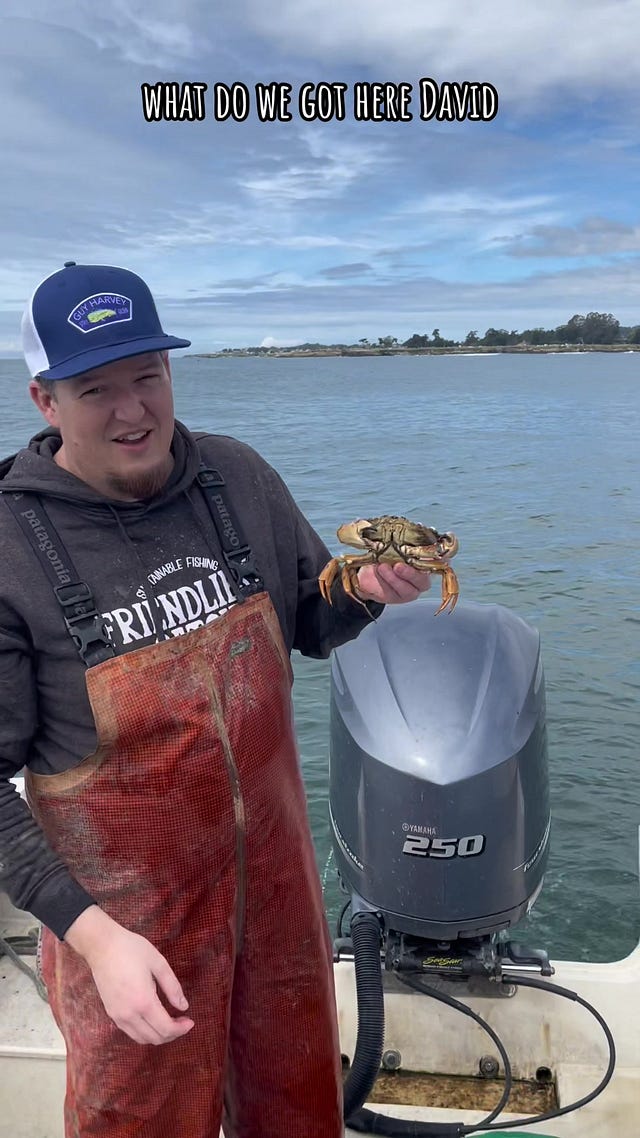
Captain Matt Rockhold and Deck Boss David were not your average fishermen aboard the F/V Friendliest Catch. They were on a noble mission—to safeguard the Pacific Ocean and promote sustainable fishing and crabbing practices. Driven by their love for the sea and a profound respect for marine life, they embarked on a transformative journey that inspired others and made a profound impact on the industry.

Captain Matt, a seasoned fisherman with extensive experience, fully grasped the significance of sustainable practices in preserving the delicate ecosystem of the ocean. He recognized that sustainable fishing and crabbing were vital for the long-term survival of fish and crab populations and the overall well-being of marine habitats. Fueled by a determination to lead by example, Captain Matt and his crew implemented an array of innovative sustainable strategies.
Their ingenuity was showcased in a groundbreaking series called "The Barnacle Chronicles." Barnacles, tiny marine organisms, would cling to the shells of crabs, causing discomfort and hindering their mobility. These unwanted guests not only diminished the crabs' quality of life but also impeded their ability to forage for food and evade predators. Captain Matt realized that removing these barnacles would enhance the crabs' welfare and allow them to flourish.
In collaboration with Deck Boss David, whose expertise in marine biology proved invaluable, they devised a unique and safe method to eliminate barnacles from crabs. They developed a specialized tool—a gentle brush—that enabled them to delicately cleanse the crabs' shells without causing harm. This technique ensured the crabs' well-being while minimizing stress during the process.
The crew's compassion for the crabs became an integral part of their sustainable fishing and crabbing practices. Each time they retrieved a crab trap, they meticulously inspected every crab, meticulously checking for barnacles. The removal process was time-consuming, but Captain Matt and his crew considered it a labor of love. They viewed it as an opportunity to give back to the creatures that sustained their livelihood and fostered a profound connection with the ocean.
News of their unique barnacle removal technique quickly spread among fellow fishermen and marine enthusiasts, propelling Captain Matt and Deck Boss David to recognition beyond their local waters. Their TikTok accounts, @friendliestcatch and @rockhold, garnered millions of views. People were captivated by the crew's unwavering dedication to sustainable fishing practices and their profound commitment to the well-being of marine life.
Continuing their journey, the F/V Friendliest Catch seamlessly integrated sustainability into every facet of their fishing and crabbing operations. Their dedication to the ocean and its inhabitants remained unyielding as they endeavored to secure a brighter future for generations to come. Through their actions and unwavering passion, Captain Matt Rockhold and Deck Boss David not only transformed their own lives but also left an indelible mark on the world. They served as a reminder of the power of responsible stewardship and the enchantment that lies within the depths of the ocean.
 Tiktok failed to load.
Enable 3rd party cookies or use another browser
"Protecting the ocean is not just a duty, but a calling. Captain Matt Rockhold and Deck Boss David exemplify the unwavering commitment to sustainable practices, reminding us that our actions today shape the future of marine life and our planet."
Rewrite your story.
Barnacles are commonly found attached to the shells of crabs, and while they may not pose significant health risks to the crab, they can still cause certain issues. Here are some of the problems associated with barnacles on crabs:
Reduced mobility: The weight and bulk of barnacles can hinder a crab's movement and make it less agile. This can affect its ability to search for food, escape predators, and overall survival.
Increased energy expenditure: Carrying barnacles requires additional energy expenditure for crabs, as they have to support the extra weight and drag. This can impact their overall fitness and reproductive success.
Shell damage: Barnacles attach themselves to the crab's shell using a cement-like substance. Their attachment can cause physical damage to the crab's exoskeleton, potentially leading to weakened or broken shells. This makes the crab more vulnerable to injury and predation.
Interference with feeding: Barnacles can obstruct the crab's feeding appendages, such as their mouthparts or maxillipeds. This interference may restrict their ability to feed properly, leading to reduced nutrition intake and potential health issues.
Parasitic infections: Some species of barnacles can be parasitic, causing further harm to the host crab. These parasitic barnacles can penetrate the crab's exoskeleton and tap into its circulatory system, potentially affecting its health and vitality.
Disease transmission: Barnacles can act as vectors for various diseases and parasites that can affect the crab's health. This includes transmitting pathogens from one individual to another, potentially leading to outbreaks and increased mortality.
It's important to note that while barnacles can pose certain challenges for crabs, they are a natural part of their environment, and crabs have evolved to deal with these interactions to some extent.
The author.
As the author of "The Positive Pen" on Substack, available at rinaldoj.substack.com, my mission revolves around crafting uplifting narratives that shed light on the untold tales of remarkable individuals within the realm of social media. Through this endeavor, my aspiration is to ignite a spark of inspiration within others, urging them to embrace love, kindness, and empathy in their interactions. Each time I pen one of these stories, I am once again reminded of the extraordinary resilience and fortitude embodied by the human spirit. The profound impact these stories have had on me motivates me to share them with the world, with the firm belief that they can foster a positive influence and inspire others to recognize the inherent beauty and benevolence in humanity. Ultimately, my goal is to spread hope, positivity, and motivation, serving as a reminder that even in the face of adversity, there is always a reason to persevere. May peace reign within us all!
