


Before AI, there was the red pen. Before the red pen, there was the typewriter. Before the typewriter, there was someone sitting across the table saying, "I don't understand what you're trying to say." Every generation has found new tools to help people tell better stories.
The tool has changed.
The storyteller hasn't.
When Substack announced its partnership with Pangram to help identify AI-generated content, the reaction was immediate.
When Substack announced its partnership with Pangram to help identify AI-generated writing, I read the announcement the same way I read most platform updates. I nodded, understood why they were doing it, and then went back to writing.
Not because I don’t care about authenticity. Quite the opposite.
Authenticity is the very reason I started The Positive Pen.
It wasn’t created to become a large publication. It wasn’t created to collect subscribers or compete with other writers. It certainly wasn’t built around algorithms or whatever the latest trend happened to be. It came from a much simpler place—a place that had been growing inside me for years.
I felt the world was forgetting the stories that mattered most.
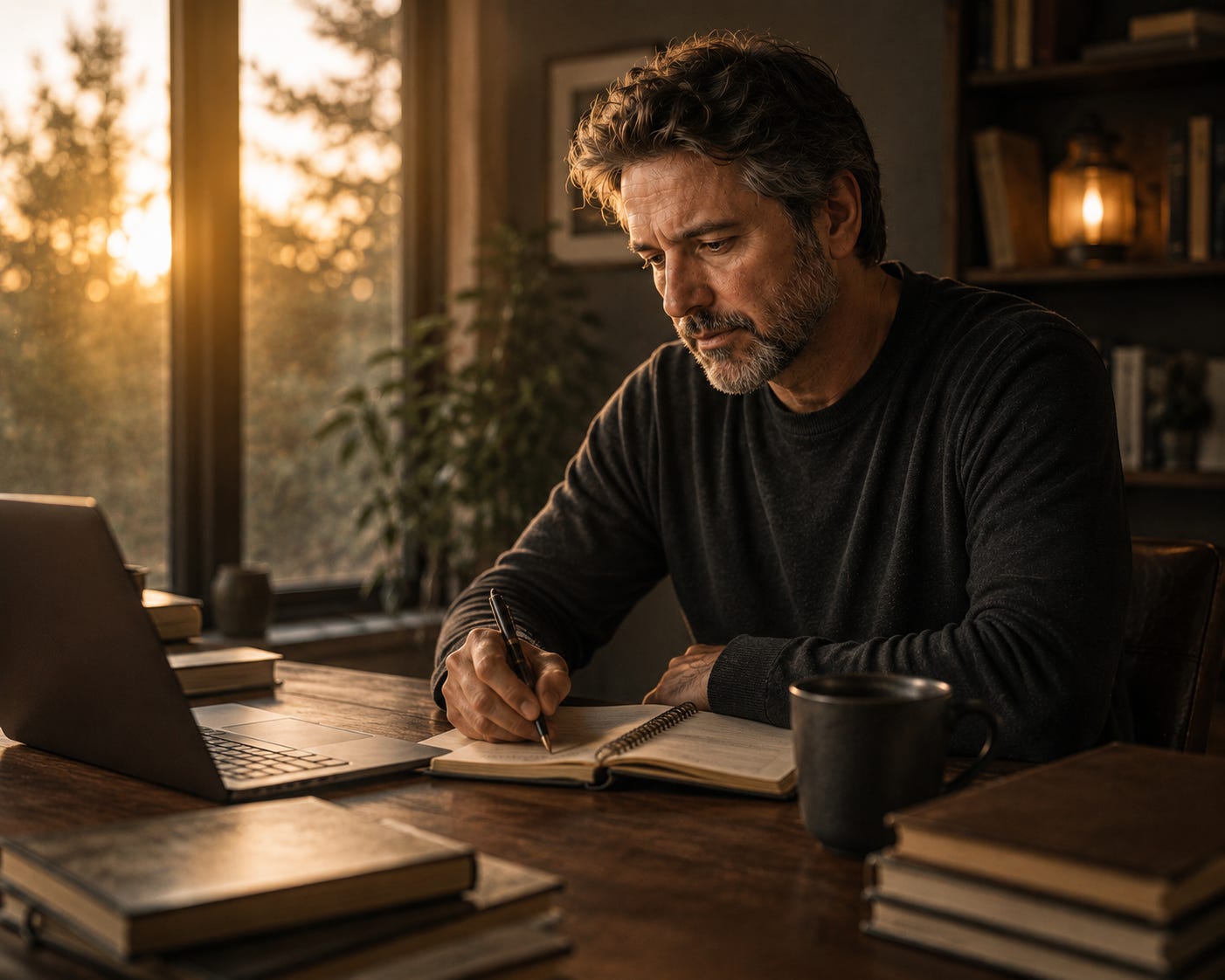
Every morning I would scroll through the news, and it seemed like the same headlines were waiting for me. Politics. Violence. Division. People arguing over who was right and who was wrong. The louder the outrage became, the more attention it received. Meanwhile, the quiet acts of kindness that happened every single day disappeared before anyone noticed them.
Yet I knew they were there.
Somewhere a stranger was helping another stranger. A nurse was staying late to comfort a frightened patient. A teacher was changing a child’s future without ever expecting recognition. A father was teaching his daughter to ride a bicycle. A neighbour was mowing an elderly couple’s lawn because they no longer could.
Those stories rarely became headlines.
They were buried beneath everything else.
That bothered me more than I could explain.
So instead of complaining about the world, I decided to change the tiny corner of it that I could influence. If the stories I wanted to read weren’t being shared, then maybe I needed to start sharing them myself.
That simple decision became The Positive Pen.
When I launched the publication, I challenged myself to write 100 inspirational stories in 100 days. It wasn’t because I thought I was a great writer. Quite honestly, I still questioned whether anyone would even care what I had to say.
What I believed in wasn’t myself.
It was the power of other people’s stories.
Every day I searched for stories that reminded us who we really are when no one is watching. Stories that proved compassion hadn’t disappeared. Stories that reminded us that courage often wears ordinary clothes and never asks for applause.
Those first hundred stories weren’t about me at all.
They belonged to firefighters, teachers, nurses, volunteers, veterans, children, parents, and complete strangers who quietly made someone else’s life better.
I simply held up the lantern.
Looking back now, I realize I wasn’t collecting inspirational stories.
I was building a lighthouse.
Not for ships.
For people.
Because every one of us eventually sails into rough water. Sometimes it’s grief. Sometimes illness. Sometimes divorce. Sometimes failure. Sometimes it’s simply waking up one morning and wondering how you became someone you barely recognize anymore.
A lighthouse doesn’t stop the storm.
It simply reminds you where home is.
That has always been my hope for The Positive Pen. I wanted someone to stumble across one story at exactly the right moment. Maybe it would encourage them to keep going for one more day. Maybe it would help them forgive someone. Maybe it would simply remind them that there is still goodness in the world, even if it doesn’t trend on social media.
And maybe—just maybe—it would give them the courage to tell their own story.
Because that’s what I believe more today than when I started.
Everyone has a story worth telling.
Not because every life is extraordinary.
But because every life is deeply human.

The Day Technology Gave Me a Voice
If you’ve followed The Positive Pen for any length of time, you probably know that I have dyslexia. I wrote an entire book about it called Dancing Letters because I wanted people to understand that dyslexia isn’t simply about reversing letters or struggling to spell. It’s living with a mind that sees the world differently while constantly wondering if you’ll ever be able to explain what you see.
For years, that difference felt like a burden.
As a child, reading out loud filled me with anxiety. Writing was even worse. I’d spend more time worrying about spelling a word than expressing an idea. I’d have thoughts racing through my head, but by the time I tried to put them on paper, they had become tangled somewhere between my mind and my pencil.
Like many children with learning differences, I began believing the lie that I simply wasn’t smart enough.
It wasn’t because I lacked ideas.
It was because I couldn’t communicate them the way everyone else seemed to.
Looking back, I realize I wasn’t afraid of writing.
I was afraid of being judged.
When people see spelling mistakes, awkward grammar, or sentences that don’t quite flow, they often assume the writer isn’t intelligent. They rarely stop to consider that the person behind those words may simply have a different way of processing language.
For a long time, I accepted that limitation.
Then something remarkable happened.
The personal computer arrived.
For most people, it was another piece of technology sitting on a desk. For me, it was freedom.
Suddenly I wasn’t trapped by a sheet of paper. I could erase a sentence without rewriting an entire page. I could move paragraphs around. I could experiment without fear of making a mess. More importantly, programs like Microsoft Word introduced something revolutionary for someone like me—spell check.
People laugh about spell check today.
I never have.
Because they don’t understand what it meant to someone who spent years believing every red underline was proof they didn’t belong.
Spell check didn’t write my stories.
It gave me the confidence to keep writing them.
As technology evolved, so did the tools.
Grammar checkers helped me organize my thoughts. Ghotit, designed specifically for people with dyslexia, became another lifeline. Dictation software allowed me to speak the stories I couldn’t always type. Text-to-speech programs let me hear my writing the way readers would hear it, exposing awkward sentences my eyes often missed.
Each new tool removed another barrier.
None of them created my imagination.
They simply helped me express it.
Long before artificial intelligence entered the public conversation, writers had always relied on other people to strengthen their work. Editors challenged our thinking. Proofreaders corrected mistakes. Beta readers asked difficult questions.
“What are you trying to say here?”
I’ve heard that question more times than I can count.
Sometimes an editor has rewritten an entire paragraph because my thoughts weren’t clear. Sometimes they suggested removing an entire chapter because it distracted from the story.
Did that make those books any less mine?
Of course not.
It made them better.
That’s why I struggle with the way this conversation about AI is often framed.
Some people speak as though the moment a writer opens Grammarly, Microsoft Copilot, ChatGPT, Claude, Gemini, or Grok, they somehow stop being the author.
I don’t believe that.
There’s an enormous difference between AI-assisted writing and AI-generated writing, and I think confusing the two does a disservice to millions of writers.
AI-generated writing begins with the machine.
AI-assisted writing begins with the human.
That distinction matters.
Every story I’ve published begins exactly the same way.
With a memory.
A conversation.
An experience.
A lesson.
An emotion I can’t shake.
Most of my first drafts are dictated into my phone while I’m walking, driving, or sitting quietly with a cup of coffee. The words are messy. The sentences wander. Sometimes my thoughts arrive faster than I can speak them.
That’s where technology helps.
Not by replacing my voice.
By helping readers understand it.
If an AI tool suggests a clearer sentence, I decide whether it sounds like me.
If it recommends removing a paragraph, I decide whether it belongs.
If it rewrites something in a way that feels artificial, I delete it.
Every single time.
Because my goal has never been to sound like artificial intelligence.
My goal has always been to sound like myself.
That’s why, after Substack introduced its new AI disclosure options, I didn’t hesitate.
I wanted my readers to know exactly how I write.
Not because anyone demanded it.
Because transparency has always been one of the values behind The Positive Pen.
So I shared the following statement with my readers:
The response surprised me.
It wasn’t outrage.
It wasn’t criticism.
It was understanding.
People didn’t see someone trying to hide behind technology.
They saw someone finally refusing to hide from it.
And perhaps that’s the real conversation we should be having.
Not whether writers use tools.
But whether they’re honest about how they use them.

The Question We Should Really Be Asking
When Substack announced it was partnering with Pangram to help identify AI-generated writing, I understood why.
Every platform wants to protect trust. Readers deserve to know whether they’re connecting with a person or consuming content that was generated with little or no human involvement. Authenticity has always been the currency of good writing, and I respect Substack for wanting to preserve it.
What surprised me wasn’t the announcement.
It was the conversation that followed.
Almost overnight, it felt as though writers had divided themselves into camps. On one side were those who believed AI had no place in writing. On the other were those embracing every new tool available. The discussion quickly stopped being about storytelling and became another argument about who was doing it the “right” way.
I’ve watched enough of life to know that when people start choosing sides, they often stop listening.
The irony is that most of us have been using forms of artificial intelligence for years without ever calling it that. Every time Microsoft Word corrected a spelling mistake, every time Grammarly suggested a clearer sentence, every time Siri understood our voice or Google finished our search before we typed the last word, we accepted technology as something that helped us communicate more effectively.
No one accused those tools of replacing the writer.
They simply made writing more accessible.
For someone living with dyslexia, those tools weren’t a luxury; they were an invitation into a world that once felt closed.
That is why I think this conversation deserves more nuance than it has been given.
The real issue isn’t whether technology exists.
It’s whether the story still belongs to the person telling it.
Authenticity cannot be measured by software because authenticity doesn’t live in sentence structure or vocabulary. It lives in lived experience. A program might recognize predictable patterns or detect phrases commonly associated with machine-generated text, but it cannot measure heartbreak. It cannot recognize the weight of grief after losing someone you love. It cannot determine whether the lesson you wrote about came from twenty years of experience or twenty seconds of prompting.
A machine can analyze language.
It cannot verify a life.
That’s an important distinction.
The stories I remember most weren’t technically perfect. They stayed with me because I believed the person writing them. I could feel that they had lived what they were describing. Readers are remarkably good at sensing honesty. Long before software existed to detect AI, readers knew when something felt authentic and when it didn’t.
That is still true today.
After I shared my transparency statement explaining exactly how I use AI-assisted editing, I wasn’t sure what to expect. I thought some readers might disagree. Others might question whether I should use these tools at all.
Instead, something unexpected happened.
The conversation became exactly what I had hoped it would become—honest.
Penelope Jayne Art wrote something that made me smile because she captured the irony better than I ever could.
“They are tools, so is a calculator. I have no problem using a calculator. I have to input the information, otherwise it sits dormant. Same with AI. So now we have a tool to check if you’re using a tool. Irony!”
She wasn’t defending artificial intelligence.
She was defending human agency.
Technology doesn’t think without us.
It waits for us.
Another reader, Sacred Storylines 🎨, shared something that reminded me this conversation extends far beyond dyslexia.
She explained how arthritis had gradually taken away her ability to flip through heavy dictionaries and reference books. Today she simply asks Siri for help or uses ChatGPT as a proofreader because hiring an editor isn’t financially possible.
Reading her comment made me stop.
We often discuss AI as though everyone approaches it from the same place.
They don’t.
For one person it’s convenience.
For another it’s accessibility.
For someone else it’s affordability.
Technology has always leveled the playing field for people who once found themselves standing outside the gate.
Pam | Echoes of Ancient Wisdom, another writer who also lives with dyslexia, reminded me that these tools have given her the confidence to write and share her own work on Substack. Laura thanked me for being open about my process because, as she said, “Your words are heartfelt from you and it comes through.” Kathleen Waltrip wrote that using AI as an accessibility tool “should be mainstream news.”
None of these readers were celebrating artificial intelligence.
They were celebrating honesty.
That, to me, says everything.
Ironically, while we debate whether software can detect AI, I see another issue that receives far less attention.
Authenticity isn’t only about how someone writes.
It’s also about how someone builds trust.
We’ve all seen publications appear overnight with thousands of subscribers. Sometimes that’s genuine. An established author may bring an existing audience from another platform, and there’s nothing wrong with that.
But we’ve also seen people chase numbers as though subscriber counts are trophies. Buying lists, inflating audiences, creating the appearance of influence without doing the hard work of earning it.
Personally, I worry about that far more than I worry about someone using Grammarly or ChatGPT to improve a paragraph.
Trust isn’t built by numbers.
It’s built one conversation at a time.
One comment.
One thoughtful reply.
One story that makes another person feel less alone.
If Substack truly wants to protect the integrity of its platform, I believe authenticity has to be viewed as something much larger than AI detection. It includes transparency, honest engagement, meaningful conversations, and the relationships writers build with readers over months and years.
Software may help identify patterns.
Only people can recognize character.
As I think about the future of storytelling, I’m surprisingly optimistic.
Every generation has worried that new technology would destroy writing. The typewriter was criticized. Word processors were criticized. Spell check was criticized. Even the printing press was once viewed with suspicion because it changed how knowledge was shared.
Yet stories survived every one of those changes.
They survived because stories have never depended on tools.
They have always depended on people.
Artificial intelligence will undoubtedly become part of the writing process for many authors. It will continue to help people organize ideas, improve grammar, translate languages, and make writing more accessible to millions who once struggled to find their voice.
I don’t fear that future.
What I fear is a future where people become so focused on detecting machines that they stop listening to the humans behind the words.
When I created The Positive Pen, I wasn’t trying to build the perfect publication.
I was trying to build a safe one.
A place where people felt comfortable enough to tell the stories they had been carrying for years.
That mission hasn’t changed.
If anything, it matters even more today.
Because in a world increasingly shaped by algorithms, automation, and artificial intelligence, our greatest advantage isn’t writing like machines.
It’s writing like ourselves.
The details of our lives.
The mistakes we’ve made.
The scars we’ve earned.
The laughter that arrived when we least expected it.
Those things cannot be manufactured.
They have to be lived.
Maybe that’s the conversation worth having.
Not whether AI helped polish a sentence.
But whether the story made another human being stop, reflect, and feel understood.
Because that has always been the purpose of writing.
And I suspect it always will be.
Thank You
Before I close, I want to thank everyone who joined this conversation.
Thank you to Dawn Jackson, Penelope Jayne Art, Sacred Storylines 🎨, rhonda doruiter, Carol Rushing, In Between Breaths, Phyllis Khare ✨👋, ganga sharma, Judi Bailey, M.Ed , Camille, V S Uma, Kathleen Waltrip, Jaye's Day's, Ruth Urman, Pam | Echoes of Ancient Wisdom, Laura, Neha Dhami, and Katelyn Buccolo.
Whether you shared your own experience, challenged me to think differently, or simply offered words of encouragement, you reminded me why I created The Positive Pen.
This was never just a conversation about AI.
It became a conversation about people.
Thank you for reminding me that no software can measure honesty, kindness, or the courage it takes to tell your story.
That’s what makes this community special. And that’s why I’ll keep writing.
Your Fellow Writer,
Rinaldo
Thank you for reading. This work is reader-supported, and your presence here matters.

About the Author
The Positive Pen by John Rinaldo is a weekly publication centered on soul work, reflection, and the quiet process of becoming. Through honest writing and lived experience, he explores what it means to grow, endure, and find your voice.
He also hosts the live podcast The Positive Pen: Stories, Soul Work & Substack, where writers, authors, and artists share their journeys through meaningful, real conversations. The show airs every Monday at 4 PM EST.
John is currently working on Ciao Bella: Forgotten in the Shadows, a documentary project telling the story of Italian families who, during World War II, risked everything to help Jewish families escape to safety across the Alps.
Author’s Note: I have dyslexia and use assistive technologies, including AI-assisted editing, to improve grammar and readability. Every story reflects my lived experiences, voice, and final approval.

© 2026 John V. Rinaldo. All rights reserved.
This work is protected under U.S. and international copyright law. No part of this publication may be reproduced, distributed, displayed, or transmitted in any form without prior written permission. Official publications are released only through verified accounts directly controlled by John V. Rinaldo.
When my daughter was around three years we were traveling the new train in our town in Colorado.
We passed by train cars that were sitting still with graffiti sprayed along the sides.
My daughter saw that and happily exclaimed, "Dancing letters, Mama!"
It was a sweet, joyous moment.
John, this is written with the honesty that I always know I can count on. It starts or adds to a conversation that many are having. Yes some writers are cheating with the way they use the technology but that is on them. I think that the bigger issue with Ai is that people hate to be fooled. They sit around a photo trying to discern whether it’s real or fake. It is that fear that makes them pause when so much that they hear isn’t true. Thank you for your honesty, for addressing the issues and challenges brought to you as writers wanting to use the newest technologies, and also for being honest about your own challenges. People find themselves in your writing. That can’t be faked. The experience shared comes through. Let the conversation begin but this definitely added to it….