

PART II: Between Sirens and Elevators
A continuation of waiting, worry, and the strange comedy of staying alive

I was stuck there, staring at the ceiling, thinking the same question over and over as if repetition might shake loose an answer. How did I get here? What did I miss? What did I do wrong?
I had done everything right. That was the problem. I saw doctors. I took their pills. I followed the advice that has been handed down for generations—rest, drink plenty of water, don’t push it. I did all of that. I did more than that. Over-the-counter drugs, home remedies, things people swear by and things people whisper about. I tried to shake off the virus that took my life and spun it hard enough to blur the edges.
And now I was sitting in a hospital room, waiting to be transferred to a larger hospital because this one, good as it was, did not have what I needed. No specialists. No machines built to see what was hiding inside my body. At that point, I knew the blood clots were in my lungs. What I didn’t yet understand was what that truly meant.
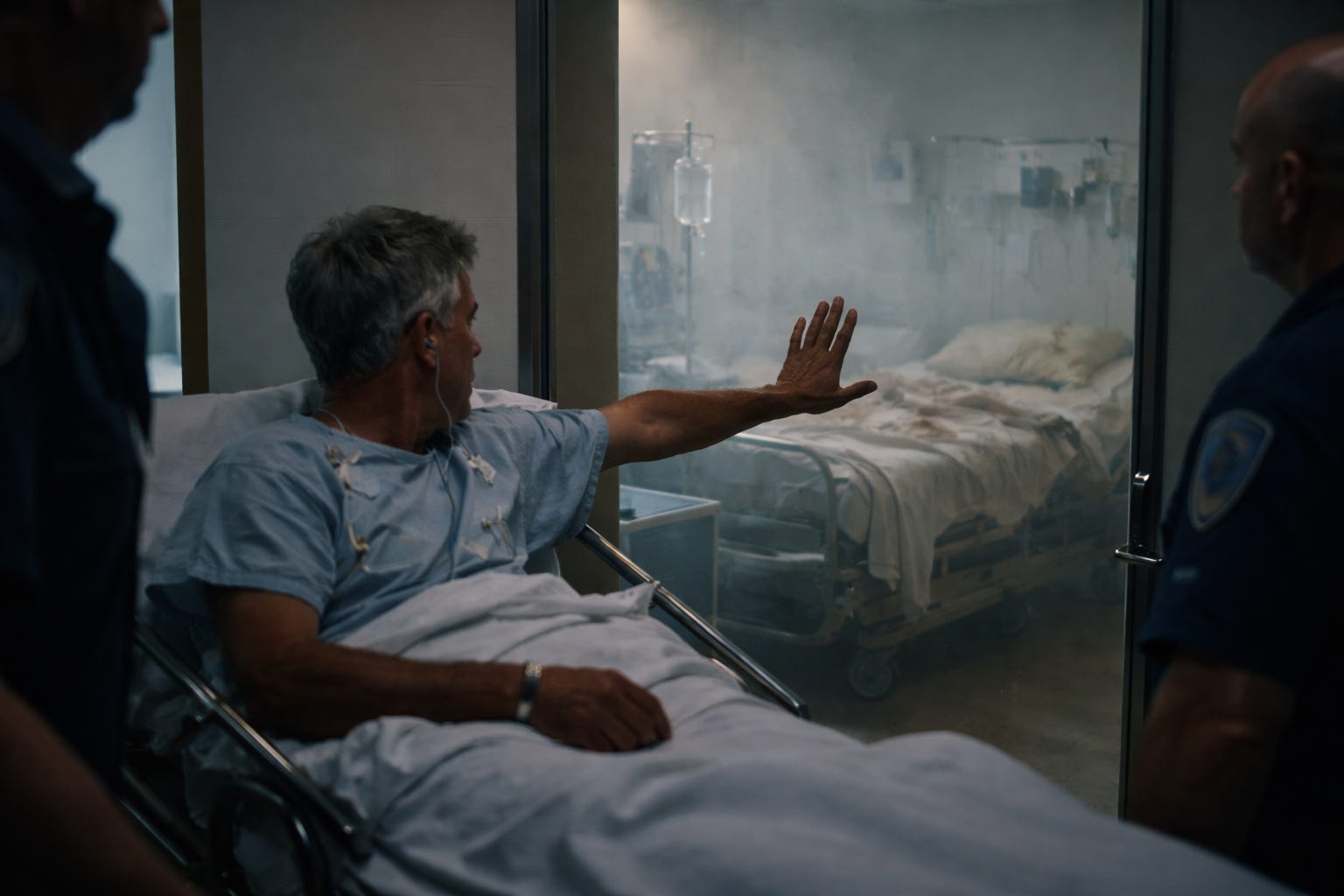
By then I had lost more than twenty-five pounds. Not the kind you celebrate. The kind that leaves your clothes hanging wrong and your face unfamiliar. I coughed constantly. Eating triggered it. Talking triggered it. Two words in and I’d be coughing for fifteen minutes, bent forward, eyes watering, trying not to throw up. Most days, I failed at that too.
At night I sweated so badly I woke up cold, hunting for warmth like an animal. No fever. No clean explanation. Just gray skin, shallow breaths, and the quiet sense that something was very wrong. Death doesn’t always knock. Sometimes it just stands nearby, patient.
By this time, I had more stickers on my chest, arms, and legs than passport stamps on a world traveler. Wires ran everywhere. My belly was dotted with injection marks. I joked to myself that I’d qualify for insulin by association. Nothing made sense. All I wanted was to feel better. All I wanted was to go home, where pain had at least been familiar.
Then the nurse came in and said, “You’re leaving tonight.”
I’d been waiting days for those words. Of all times, it came after I had arrived at the hospital during one of the worst winter storms the country had seen in years. Blizzard conditions. Whiteout roads. Somehow I had driven myself there, slow and steady, relying on instincts I hadn’t used since northern winters long ago. I worried about my car. I worried it would be towed, buried, forgotten. The staff waved that away.
“Your car will be fine,” they said. “Just worry about getting better.”
All I can say is thank you.

When the critical care unit arrived to transport me, I remember thinking, Am I critical care? The phrase landed heavier than I expected. I tried to stay positive. Focus on the idea that this was forward motion. But the mind is never fully obedient. Somewhere in the back, the word what if began pacing.
The paramedics were calm, conversational. They talked about life. About work. About whether they liked their jobs. It felt almost normal, which I appreciated. This was their last ride of the shift, they said. I tried not to read into that.
The transport itself was quiet. Professional. Efficient. When we arrived at the other hospital, the cold cut through the blankets they had given me. Winter doesn’t care who you are. The building swallowed us whole as the doors slid open.
We waited for the elevator. No talking. They knew where they were taking me. I knew I had no choice but to go.
The sixth floor.
That’s when the smell hit.
It was immediate and aggressive, like something had gone terribly wrong and nobody wanted to admit it. A thick, unmistakable odor that grabbed the back of my throat. I thought, Is this the whole building? Is this just how it is here?
I watched the paramedic in front of me react before he could stop himself. A slight pause. A look that said, Oh wow.
As we got closer to my assigned room, the smell grew stronger. By the time they wheeled me to the doorway, it was overwhelming.
I said, “Stop.”

Everyone stopped.
“I’m not going in there,” I said. Calmly. Clearly. “That smell will trigger my coughing. I’ll go into a spasm. I’ll throw up. I’m not doing it.”
They relayed the message to the nurse. She looked at me like I’d asked for a penthouse suite.
“That’s your room.”
“No,” I said. “It’s not.”
The supervisor arrived. Same message. Same look.
“You don’t understand,” I said. “I’ve been coughing for weeks. That smell will set me off. I know what happens next. I’m not going in there.”
I turned to the paramedic. “Am I wrong?”
He didn’t hesitate. “Hell no. You’re one hundred percent right.”
That was the moment something shifted. They switched me to their stretcher. The supervisor backed off. The paramedic tucked me into a corner like it was my temporary refuge. He shook my hand.
“Take care of yourself,” he said.
I thanked him. Another paramedic smiled and said, “You’re in good hands. Despite the smell.”
I laughed. I couldn’t help it.
For the next three hours, I watched the hospital work around me. Environmental services—environmentalists, as the badge said—cleaned furiously. That title still makes me smile. There was chaos, but not because of me. That smell had been there long before I arrived. No one had addressed it. That bothered me more than the smell itself.
Eventually, exhaustion won. It must have been two or three in the morning when the nurse came back.
“That’s your room,” she said again.
“No,” I said.
“Yes,” she said.
I weighed my options. One room smelled like disaster. The other was now hosting the aftermath of what I can only describe as a full biological surrender by another patient. I chose the lesser evil.
Option two.
Thank God I did.
It was a private room.
No roommates. No shared air. No shared disasters. I don’t think the supervisor chose that by accident. Given my coughing, my condition, and everyone’s growing caution, it made sense. They marked it as COVID protocol. I didn’t care. Swab my nose a hundred times if it means peace and less defecation in my life.
They wheeled me in. Closed the door. Quiet returned.
Now I lie here, waiting again. More tests. More specialists. More conversations with doctors who look at charts instead of guessing. I don’t know what happens next. But I know this place is built to ask harder questions.
For now, I’ll try to sleep.
That feels like progress.
Enjoyed this? Fuel me ☕……………

If you’re looking for the beginning, this is where my story starts.
Thank you for reading. This work is reader-supported, and your presence here matters.

About the Author
John Rinaldo writes Soul & Stories, a weekly publication centered on soul work, reflection, and the quiet process of becoming. He also hosts the live podcast Stories, Soul Work & Substack every Monday at 4 PM EST, where written ideas open into honest conversation.
He is currently working on The Hole: Forgotten in the Shadows, a documentary written and hosted by John Rinaldo and Hassan, telling the story of Italians who resisted and secretly helped smuggle Jews to safety during World War II.
John also continues his work through The Hard Truths, inspired by his book Earned, Not Given, where he explores identity, resilience, and the often-unseen experience of fathers.
The Positive Pen © is a reader-supported publication. To receive new posts and support my work, consider becoming a free or paid subscriber.
Other Ongoing Series
Learn more about The Hard Truths, inspired by Earned, Not Given, exploring identity, resilience, and the erasure of fathers—and The Hole: Forgotten in the Shadows, a documentary series on Italians who helped smuggle Jews to safety during World War II.

Advocating for yourself in that situation took courage and determination, especially in light of your weakened physical condition. I’m so glad you did.
John .. its hard to find the right words , I find my mind locked up on how the human body draws deeper then we can even imagine and dredges up the will to survive.
I will admit .. that when you said "stop" and were still able to command human decency , I smiled
not because of any part of what you endured , but because you not only
were fighting for your own care .. but in doing so brought the staffs attention to better care for all.
Praise God you are feeling better..
thank you for sharing of yourself.